






Lost Dune Script Unearthed, May Have Disappointed Fans
Ridley Scott's Lost Dune: A 40-Year-Old Script Unveiled
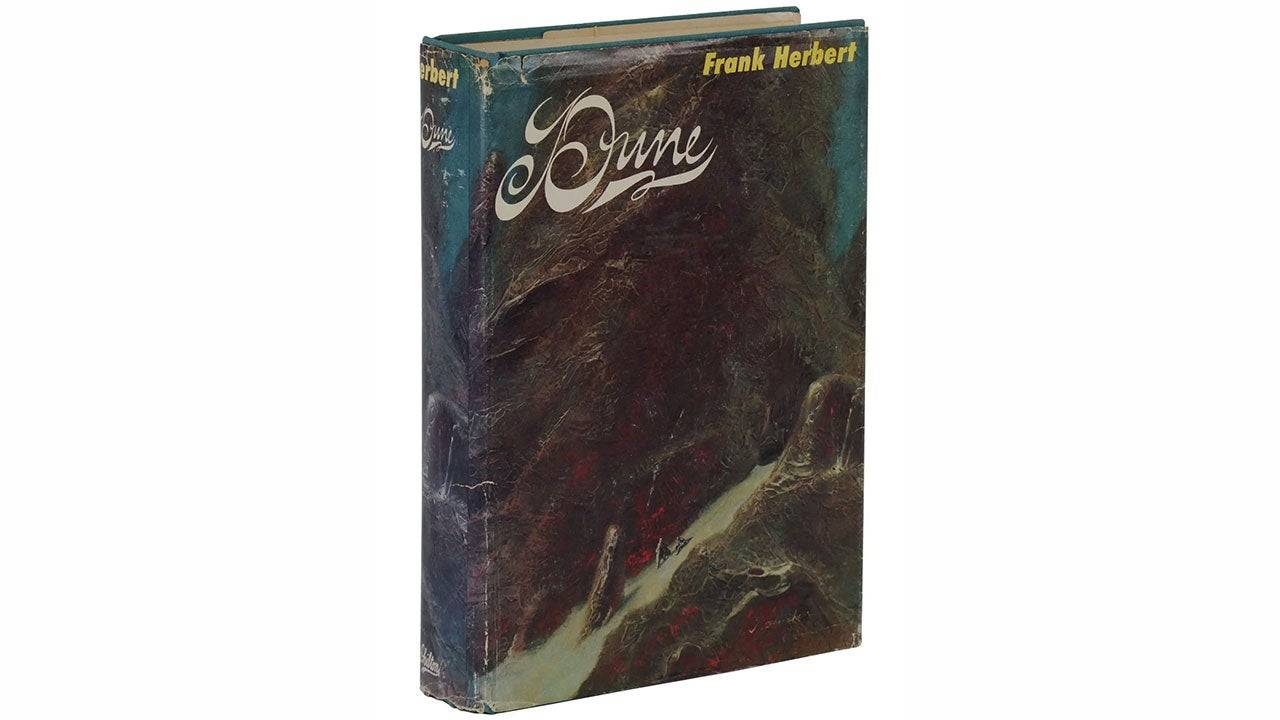
This week marks four decades since David Lynch's Dune premiered. Initially a box office flop, it's since cultivated a devoted cult following, standing in stark contrast to Denis Villeneuve's recent big-screen adaptation. Lynch's involvement followed Ridley Scott's departure from the project in 1981. Until now, details about Scott's seven-to-eight-month development period remained scarce. Thanks to T.D. Nguyen's discovery of a 133-page October 1980 draft by Rudy Wurlitzer (within the Coleman Luck archives), we now have unprecedented insight.
Scott inherited Frank Herbert's lengthy, un-cinematic screenplay. He selected a few scenes but commissioned Wurlitzer for a complete rewrite. Like Herbert's and Villeneuve's versions, it was conceived as a two-part epic. Wurlitzer described the project as challenging, stating they aimed to capture the book's essence while injecting a unique sensibility. Scott himself later confirmed the script's quality.
Several factors contributed to the project's collapse: Scott's personal grief, location disputes with producer Dino De Laurentiis, budget overruns, and the allure of Universal's Blade Runner project. Crucially, Universal executive Thom Mount noted that Wurlitzer's script lacked universal acclaim.
Was the adaptation cinematically flawed, or simply too dark and politically charged for a mainstream release? A detailed analysis of the script allows for independent judgment. Wurlitzer and Scott declined to comment for this article.
A Darker Paul Atreides
The script opens with a dream sequence depicting apocalyptic armies, foreshadowing Paul's destiny. Scott's characteristic visual density is evident in descriptions like "birds and insects become a whirling hysteria of motion." The seven-year-old Paul, far from Timothée Chalamet's portrayal, undergoes a trial by pain, his Litany Against Fear intercut with Jessica's, showcasing their psychic bond. The burning hand imagery echoes Lynch's version, albeit non-literal.
Paul's subsequent actions – retrieving a sword with The Voice and nearly killing Duncan Idaho – highlight his "savage innocence." Producer Stephen Scarlata contrasts this assertive Paul with Lynch's more vulnerable depiction, arguing that Lynch's approach generates greater tension and concern. The adult Paul is depicted as a master swordsman, handsome and charismatic, while Duncan, reminiscent of Jason Momoa's portrayal, displays characteristic humor.
The Emperor's Demise and Intrigue
A pivotal twist involves the Emperor's death, revealed during a scene featuring a gardener in a rock garden. This catalyst, absent from the novel, is lauded by screenwriter Ian Fried for its dramatic impact, though acknowledging its divergence from source material. The Emperor's death is witnessed by the Great Houses within a mystical setting, and the deceased Emperor speaks through a medium, bestowing Arrakis upon Duke Leto. The ensuing conflict with Baron Harkonnen, who echoes a famous line from Lynch's film ("He who controls the spice controls the universe"), is established.
The Guild Navigator, a spice-mutated creature, is visualized as a strikingly alien being, foreshadowing Scott's later work. Fried highlights this as a missed opportunity in Villeneuve's films. The Atreides' arrival on Arrakis showcases a medieval aesthetic, with Bosch-like Dew Collectors and a focus on feudal customs. Liet Kynes introduces Chani, emphasizing the ecological damage caused by spice harvesting. Their ornithopter flight, culminating in a worm attack, mirrors the dystopian cityscapes of Blade Runner.
Violence and Urban Decay in Arakeen
Arakeen is depicted as a squalid city with stark class disparity, inspired by The Battle of Algiers. A bar fight scene, featuring Paul and Duncan, is considered out of place by Scarlata, disrupting Paul's character arc. This scene leads to an encounter with Stilgar, who decapitates a Harkonnen agent. Jessica's meditation scene emphasizes her power, while a scene depicting dehydrated citizens highlights social inequality.
The betrayal of Dr. Yueh, the assassination of Duke Leto, and the escape of Paul and Jessica are depicted with graphic violence, far exceeding the intensity of previous adaptations. The absence of Paul and Jessica's incestuous relationship, a point of contention with Herbert and De Laurentiis, is notable. Despite this omission, a scene depicting Paul and Jessica lying together on a sand dune hints at their complex dynamic.
The Deep Desert and the Fremen
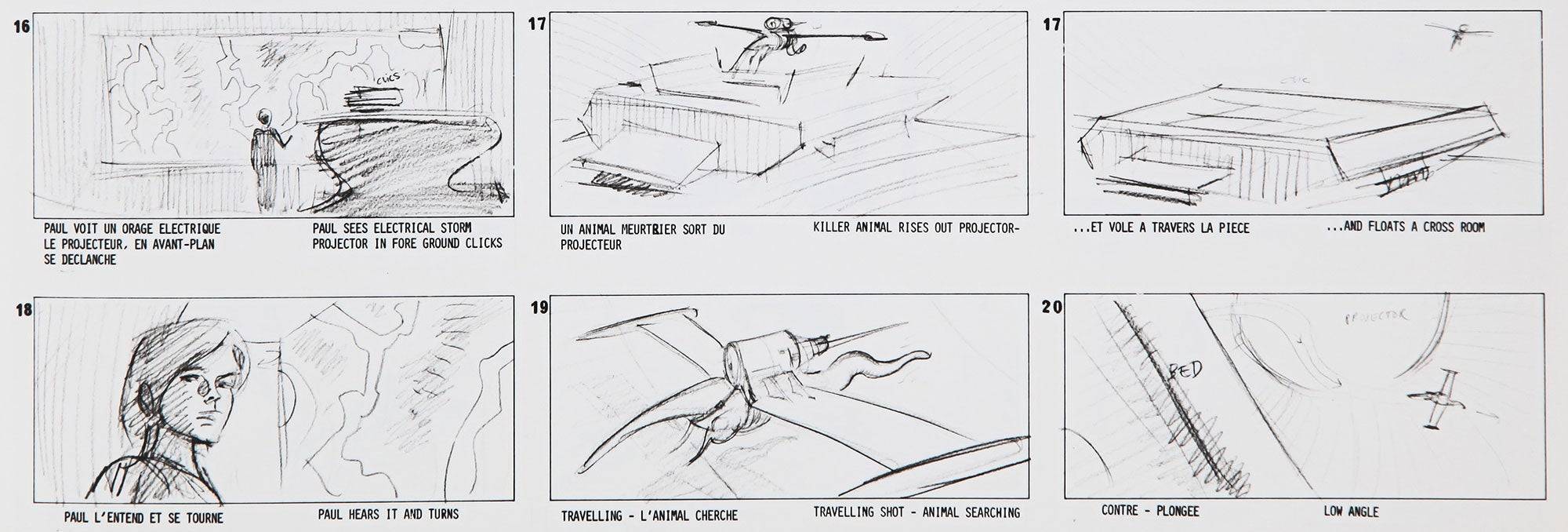
Paul and Jessica's desert escape is intense, featuring a crash landing and a struggle for survival. Their encounter with a sandworm mirrors Villeneuve's adaptation. The script includes a Fremen Spice Den scene where Paul experiences visions, and a subsequent battle with a bat-like Hunter-Seeker, echoing Jodorowsky's design. The Fremen acceptance ceremony, featuring the Water of Life, is described as a mystical and even erotic ritual, concluding with Paul's acceptance into the tribe. The script ends with the implication of a sandworm ride, a key element Herbert desired in Scott's film.
A Critical Analysis
Herbert's focus on the dangers of charismatic leaders is central to Villeneuve's adaptation but less prominent in Lynch's work. Wurlitzer's script presents Paul as a more ruthless and ambitious figure, with complicit characters aiding his rise to power. The script's dark and mature tone, diverging significantly from the novel, may explain its lack of studio support. Mark Bennett suggests that the numerous deviations and focus on "magic" likely would have displeased Dune fans.
The Legacy of Scott's Vision
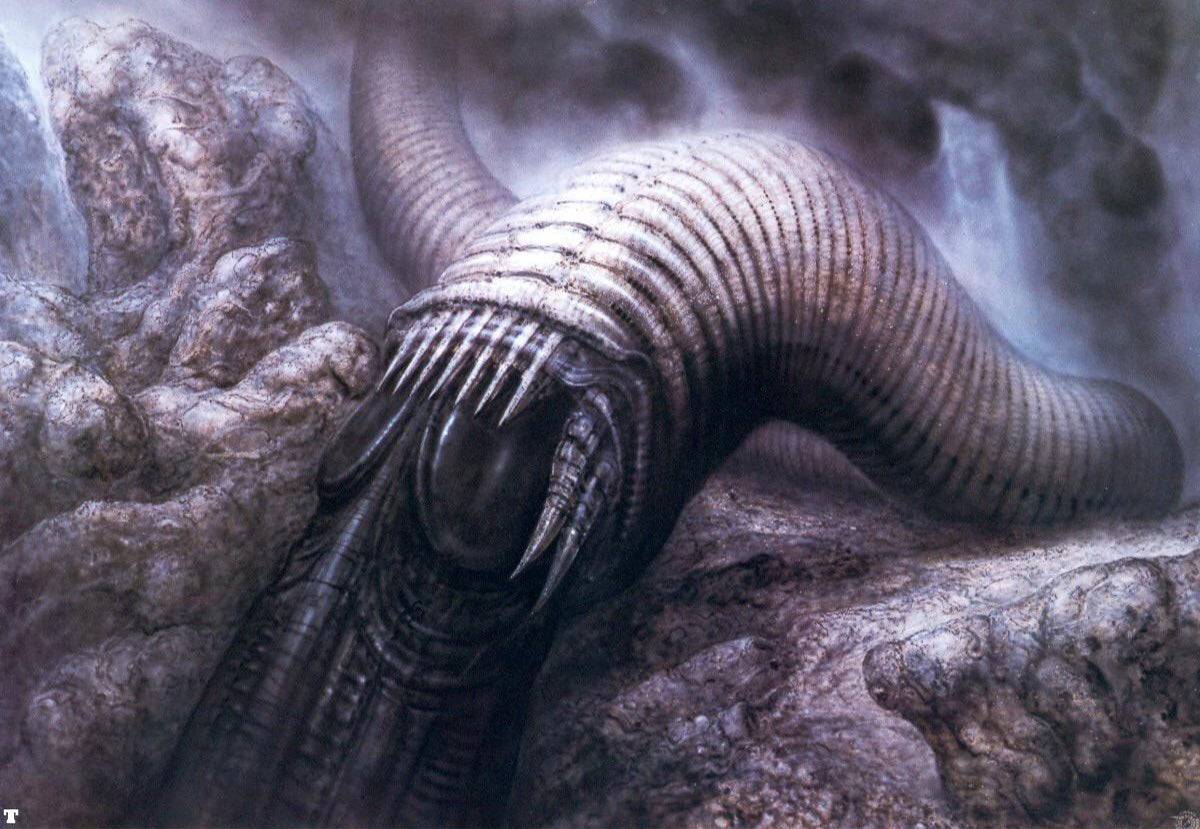
H.R. Giger's design work, including a phallic sandworm and furniture made from skeletons, is highlighted. Vittorio Storaro's involvement as cinematographer is noted. The script's emphasis on ecological concerns, political intrigue, and spiritual elements is praised by Ian Fried, contrasting it with the focus on spiritual aspects in Lynch's film and the perils of charismatic leadership in Villeneuve's. The script's exploration of ecological themes, fascism, and the need for societal awakening remains relevant today, suggesting that a future adaptation could benefit from its unique approach.
-
 Jan 27,25Roblox: Bike Obby Codes (January 2025) Bike Obby: Unlock Awesome Rewards with These Roblox Codes! Bike Obby, the Roblox cycling obstacle course, lets you earn in-game currency to upgrade your bike, buy boosters, and customize your ride. Mastering the various tracks requires a top-tier bike, and thankfully, these Bike Obby codes deliver
 -
 Feb 20,25Where to Preorder the Samsung Galaxy S25 and S25 Ultra Smartphones Samsung's Galaxy S25 Series: A Deep Dive into the 2025 Lineup Samsung unveiled its highly anticipated Galaxy S25 series at this year's Unpacked event. The lineup features three models: the Galaxy S25, S25+, and S25 Ultra. Preorders are open now, with shipping commencing February 7th. Samsung's web
 -
 Jan 11,25Jujutsu Kaisen Phantom Parade: Tier List Revealed This Jujutsu Kaisen Phantom Parade tier list helps free-to-play players prioritize character acquisition. Note that this ranking is subject to change with game updates. Tier List: Tier Characters S Satoru Gojo (The Strongest), Nobara Kugisaki (Girl of Steel), Yuta Okkotsu (Lend Me Your Stren
 -
 Mar 04,25The Godfeather swoops onto iOS, pre-registration open now! The Godfeather: A Pigeon-Fueled Mafia War Arrives on iOS August 15th! Pre-register now for The Godfeather: A Mafia Pigeon Saga, a roguelike puzzle-action game launching on iOS August 15th! Evade the Pidge Patrol, unleash your avian arsenal (ahem, droppings), and reclaim the neighborhood from both h